How To Prepare Your Dog to Pass the AKC Canine Good Citizen Test
September 5, 2023


How do you train your furry friend to pass the American Kennel Club’s Canine Good Citizen Test? From understanding the test itself, beginning the process of obedience training, to mastering the specific challenges and utilizing resources effectively, this comprehensive guide aims to inspire and instruct dog owners to help their pets to excel. Whether you are new to dog training or are a seasoned professional, we invite you to engage with this content-rich training resource.
Table of Contents
What is the AKC Canine Good Citizen Test?
The AKC Canine Good Citizen (CGC) test is a certification program run by the American Kennel Club designed to test a dog’s basic good manners and obedience skills. It evaluates 10 key areas including accepting a friendly stranger, allowing petting, walking through a crowd, sitting politely for petting, appearance and grooming, walking on a loose lead, walking through a door/gate, coming when called, reaction to another dog, supervised separation, and more. The CGC test provides a clear way for dog owners to demonstrate that their dogs have the training and demeanor to be reliable, well-behaved members of their community.
Understanding the Canine Good Citizen Test
The CGC test is intended for all dogs, including purebreds and mixed breeds. There is no age limit, though dogs must be old enough to have received necessary immunizations such as rabies. Dogs must also have a solid foundation in basic obedience since skills like heeling on leash, sitting politely, and coming when called are evaluated.
There are 10 test items on the CGC test:
- Accepting a friendly stranger – the dog allows a friendly stranger to approach and speak to the handler without showing shyness or resentment
- Sitting politely for petting – the dog sits to allow a friendly stranger to pet it while it remains calm
- Appearance and grooming – the dog permits inspection and grooming such as brushing and examination of ears and paws
- Out for a walk – the handler walks the dog on a loose lead and makes a right, left, and about-turn
- Walking through a crowd – the dog walks politely on a loose leash through a crowd
- Sit and down on command/Staying in place – the dog responds promptly to handler’s commands to sit and down and remains in place on command
- Coming when called – the dog comes promptly when called by the handler
- Reaction to another dog – the dog encounters a friendly dog and remains under control, showing no more than casual interest
- Reaction to distractions – the dog is confident when faced with common distracting situations such as joggers or a person on a bike
- Supervised separation – the handler walks out of sight for 3 minutes and the dog remains calm
The CGC test is a non-competitive pass/fail evaluation. All dogs must be tested on a flat buckle or snap collar or harness. Training devices like pinch collars, head halters, or electronic collars are not permitted. The test must be completed in approximately 15 minutes.
The Importance of the American Kennel Club Canine Good Citizen Test
There are many benefits to dogs completing the AKC’s CGC test:
- It demonstrates the dog is well-behaved and a welcomed member of the community
- Helps cement dog/owner relationship through training together
- Indicates suitability for therapy work, public access testing, and more
- Shows commitment to responsible dog ownership and citizenship
- Can help dogs be allowed in more public places like airlines and rental housing
The CGC is often used by therapy dog organizations to indicate a dog’s readiness for interacting with vulnerable populations. It can also help prepare teams for public access testing required for service dogs. Additionally, some homeowner’s insurance companies encourage CGC certification.
Training for the CGC test helps strengthen the bond between dogs and owners. By working together on skills like coming when called, walking on a loose leash, meeting friendly strangers appropriately and remaining calm during separation, owners gain better insight into their dogs’ personalities.
AKC Library: A Resource for Canine Good Citizen Training
The AKC website contains a wealth of resources to help owners train their dogs for the Canine Good Citizen test. Here are some of the key resources available on the AKC library to support CGC training:
- CGC training videos – Video tutorials demonstrating how to train each skill on the test
- CGC evaluator guidelines – Details on test administration to understand exact evaluator expectations
- CGC exercise descriptions – Written explanations and tips for teaching each test exercise
- CGC downloadable forms – Blank CGC test forms, owner affidavits, rental housing letters, and more
- CGC training handbook – Comprehensive guide to preparing dogs for the Canine Good Citizen test
The AKC recommends beginning CGC training early, as soon as puppy classes if possible. Each dog learns at a different pace, but it can take 6 months to a year to fully prepare a dog for the CGC test. Owners should focus on positive, reward-based techniques and make training fun!
Finding local CGC classes can also be very helpful for training. The AKC website has a class locator to find accredited AKC CGC evaluators offering training and testing.
With proper preparation using resources like the AKC library, the Canine Good Citizen test can showcase dogs’ good manners and support the beautiful bond between dogs and their owners.
How to Start Basic Obedience Training for Your Dog?
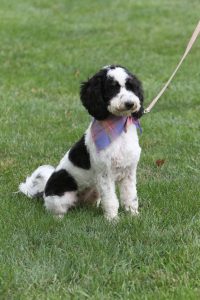

Basic obedience training is essential for any dog, but especially important if you want your dog to pass the American Kennel Club’s (AKC) Canine Good Citizen (CGC) test. The CGC test demonstrates that your dog can behave politely in public and has mastered basic obedience cues. Passing the 10-part CGC test is a requirement for therapy dogs, service dogs, and emotional support animals. It’s also a prerequisite for more advanced AKC obedience titles.
You can find CGC classes at local dog training facilities, but you should start working on basic obedience at home. Training for 10-15 minutes daily will help prepare your dog for CGC classes. Work at your dog’s pace and keep sessions positive and rewarding.
Decoding Basic Obedience: Training Tips for Canine Good Citizen Test
Here are some tips for training your dog for the 10 parts of the CGC test:
Test 1 – Accepting a friendly stranger: Have friends and family approach and pet your dog in a friendly manner. Reward calm behavior.
Test 2 – Sitting politely for petting: Practice “sit” and reward your dog for staying seated while being petted from head to tail.
Test 3 – Appearance and grooming: Handling paws, ears, and mouth prepares your dog for vet exams and grooming. Reward tolerance.
Test 4 – Out for a walk: Loose leash walking takes practice. Stop or change directions when your dog pulls. Reward by your side walking.
Test 5 – Walking through a crowd: Exposure to crowded areas will help your dog remain calm. Let strangers know not to interact.
Test 6 – Sit and down on command/Staying in place: Master “sit,” “down,” and “stay” cues by rewarding and gradually increasing distance.
Test 7 – Coming when called: Reward recalls and practice with long lines before removing leash. Vary locations and distractions.
Test 8 – Reaction to another dog: Set up calm meet-and-greets with friend’s dogs. Reward polite behavior, but don’t allow interactions.
Test 9 – Reaction to distractions: Desensitize your dog to noises like dropping metal bowls. Reward calm responses.
Test 10 – Supervised separation: Practice short separations by leaving the room or house. Work up to longer durations.
Using Dog Names Effectively in Training
Get your dog’s attention and establish focus by using their name before cues. Say the name once, then give a clear, concise command like “Fido, sit.” Praise successes like “Good sit, Fido!”
Add an enthusiastic tone when using your dog’s name positively. Use a firmer tone for corrections without yelling. Avoid overusing your dog’s name to prevent it from losing meaning.
Short 1-2 syllable names are best. Make sure cues sound different from your dog’s name to avoid confusion. For example, “Chip, come” and not “Chippy, come here.”
Loose Leash Training: Ensuring a Calm and Composed Canine
Loose leash walking is essential manners for the CGC test and public. With patience and consistency, you can teach your dog not to pull or lunge on leash.
Use treats to reward your dog for walking by your side. Change directions frequently so your dog must pay attention to you. Stop when the leash becomes taut.
Consider using a front-clip harness or head halter to discourage pulling by making it unproductive. Never use choke collars, prong collars, or shock collars which can harm your dog.
Work on impulse control by asking your dog to “sit” or “wait” before walks, when crossing thresholds, and before greeting people.
Remain calm and patient during training. Don’t get frustrated or angry. Keep sessions positive, short, and rewarding.
How to Handle the Specific Challenges of the AKC Canine Good Citizen Test?
The AKC Canine Good Citizen test demonstrates that your dog can behave politely in public settings. While some parts are basic obedience, others present unique challenges that require specific training techniques. Here’s help overcoming the trickiest CGC test elements.
Training Your Dog For Loose Leash Walking
Walking calmly on a loose leash is challenging for many dogs. Start by training your dog to pay attention to you and ignore distractions. Use rewards to reinforce focusing on you. Practice loose leash walking in low distraction areas first, then increase difficulty.
If your dog begins pulling, abruptly turn and walk in the opposite direction. This teaches your dog to follow your lead. Give treats and praise when your dog catches up and maintains a loose leash. Avoid letting them get to the end of the leash and pull against the collar.
Teaching Your Dog to Remain Calm Around Strangers
Some dogs jump up, bark, or shy away when approached by friendly strangers. Desensitize your dog by asking friends to briefly interact with your dog, while you reward calm behavior. Start with one person at a time, then progress to small groups.
If your dog reacts to strangers on walks, cross the street early to create more distance. Reward your dog for being relaxed, and avoid punishing reactions. With time and consistency, your dog will learn strangers are not a threat.
Strategies for Supervised Separation
Being briefly left with a trainer is stressful for some dogs. Practice separations at home first. Give a treat, say your departure cue like “Be right back,” and step out of view for a few seconds. Gradually increase your separation time over multiple sessions.
Make coming and going low-key; avoid emotional departures. Provide interactive toys to keep your dog occupied. Consider having a friend attend the test so your dog has a familiar person present when you leave.
What Resources and Aids Can Assist in Canine Good Citizen Training?
Preparing a dog for the American Kennel Club’s (AKC) Canine Good Citizen (CGC) test can seem daunting, but having the right resources and aids can make the training process more manageable. Here are some of the most helpful resources and aids for CGC training:
Utilizing Downloadable Forms for Tracking Progress Toward The AKC Canine Good Citizen Test
The AKC website offers helpful downloadable forms for CGC training, including a Responsible Dog Ownership Pledge, training logs to record progress, checklists of CGC test requirements, and practice scoresheets. Using these forms to track training progress can keep the owner and dog on track towards CGC certification.
For example, the CGC Test Checklist allows the owner to mark when a dog has mastered each test requirement, like accepting a friendly stranger, walking on a loose leash, coming when called, and remaining calm during supervised separation. The checklist helps identify areas needing more practice.
Training Treats: A Reward System for CGC Training
Using treats strategically as positive reinforcement during CGC training is key. Treats should be enticing, bite-sized, and easy to deliver quickly. Cutting treats into small pieces avoids overfeeding.
Treats are first given when a dog merely looks at or moves toward a stimulus, then only after the desired calm behavior is performed. Fading treats over time prevents dependency. Alternatively, interspersing treats with praise prevents satiation. High-value treats reserved solely for training make an impact.
AKC Certified Therapy Dog Team: An Effective Model for CGC Preparation
Observing a certified therapy dog team in action can provide an excellent example for owners to model CGC training after. Therapy dogs have passed the CGC test and additional training for visiting hospitals and schools. Their advanced training emphasizes calmness and focus around medical equipment, loud noises, and unpredictable behavior.
Noticing how therapy dog handlers use voice cues, body language, treats, and praise to maintain focus and exemplary manners in distracting environments demonstrates effective CGC training in action. Owners can apply similar positive reinforcement techniques.
With diligent practice and utilzing the right training aids, owners can feel empowered in prepping their dog for the CGC test’s demonstration of good manners and citizenship. Tracking progress, establishing a reward system, and modeling therapy dog team expertise will assist in the training journey.
