Where Uncertainty Meets Loyalty and Steady Presence
May 14, 2026
Lately, it feels like the weight of the world has been pressing in from every direction. The headlines alone are enough to steal your breath—especially when you have two boys in the military and all you want is for the conflict with Iran to end.

Closer to home, a beloved family member is facing a difficult medical diagnosis, and the uncertainty surrounding research and treatment options only adds another layer of fear. It’s hard not to feel like time is slipping through our fingers faster than ever, like we’re racing toward a future we’re not even sure how to prepare for.
Since January, life has moved at a relentless pace. Between multiple litters of puppies and growing responsibilities at work, the days blur together in a whirlwind of obligation. I often find myself overwhelmed, bone-tired, and, if I’m being honest, afraid. It’s a quiet kind of fear that lingers in the background, even in the middle of a busy day.
The other night, while mindlessly scrolling through Instagram, I stumbled across a short video from a doctor who spoke directly to that feeling. She said that in these uncertain times, the people who seem to be thriving have one thing in common—they have pets. She called them the glue holding us together and even said she’s begun “prescribing” cats and dogs to patients struggling with anxiety and depression.
And the more I thought about it, the more I realized how true that has been in our own home.
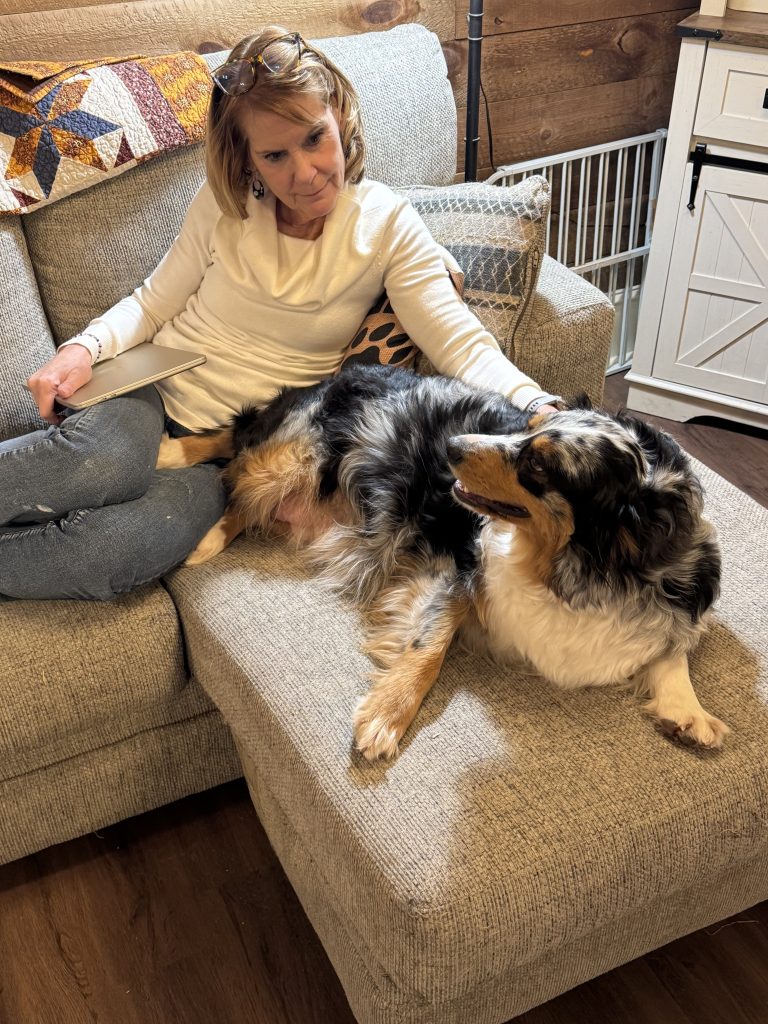
Every day when I walk through the door from school, there’s no pause—just straight into the second full-time job: caring for puppies. There are pens to clean, floors to disinfect, bowls to fill, and routines that cannot be skipped, no matter how tired we are. The work stretches through the entire evening until we finally collapse into bed, completely spent.
But somewhere in the middle of all that work, something unexpected happens.
We laugh.
We smile.
We run through the yard, calling out to a pack of tumbling, joyful puppies chasing after us. We drop to the ground and let ourselves be swarmed in a flurry of wagging tails and tiny paws. For a few moments, the noise of the world quiets, replaced by something simpler and lighter.
The work is constant—sometimes exhausting, often overwhelming—but the joy is just as constant. It shows up in the smallest, most ordinary moments and reminds us, even on the hardest days, that there is still goodness here.
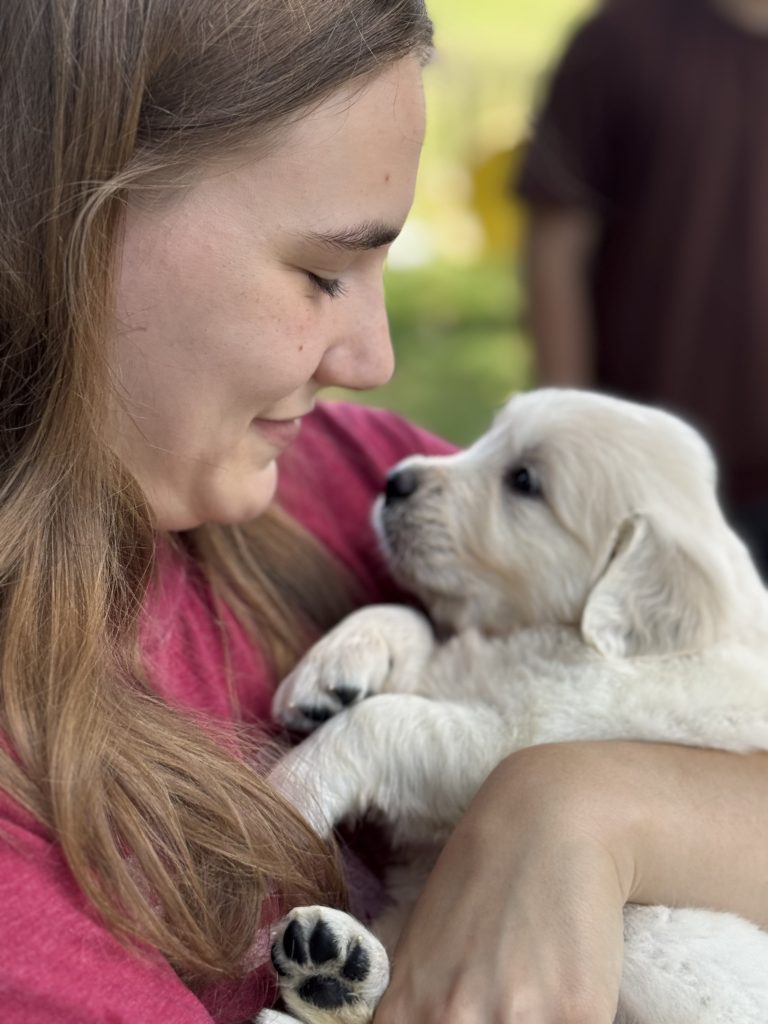
There’s a particular kind of comfort that only a dog can offer. It isn’t loud or complicated. It doesn’t try to fix everything. It simply shows up—steady, warm, and unwavering—when life feels anything but.
In moments of grief, uncertainty, or exhaustion, a dog has a way of anchoring us. Not by changing our circumstances, but by changing how alone we feel inside them.
The Quiet, Everyday Support We Don’t Always Notice
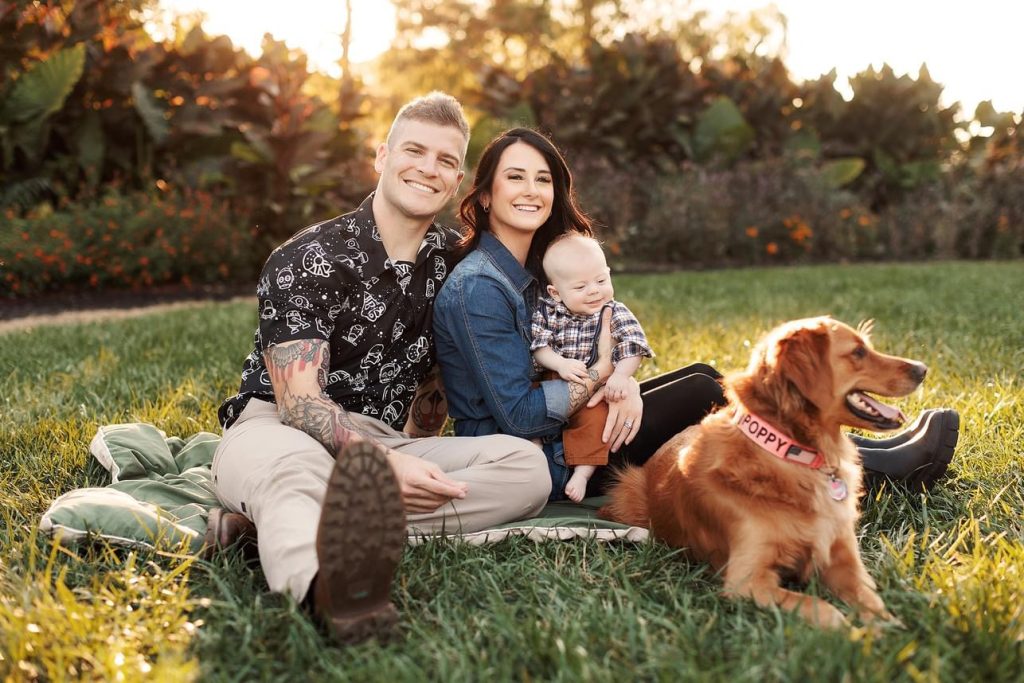
There are obvious ways that dogs serve us. We see the little red harnesses worn by service and therapy dogs. We know that dogs are useful to humans.
Long before we consider service roles or formal training, dogs are already helping us in small, profound ways.
They create structure when everything feels chaotic. They get us out of bed because they need to go outside. They pull us into the present moment—away from spiraling thoughts and toward something simple: a walk, a game, a shared pause.
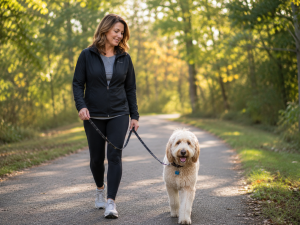
There’s something grounding about that rhythm. Feed them. Walk them. Sit beside them. Repeat.
And in that repetition, life becomes just a little more manageable. We feel a little braver.
Why Dogs Are So Intuitive
It’s easy to say dogs are “intuitive,” but there are real reasons behind it.
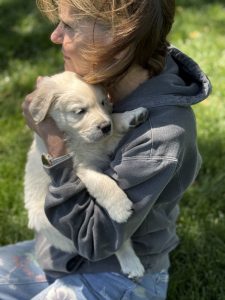

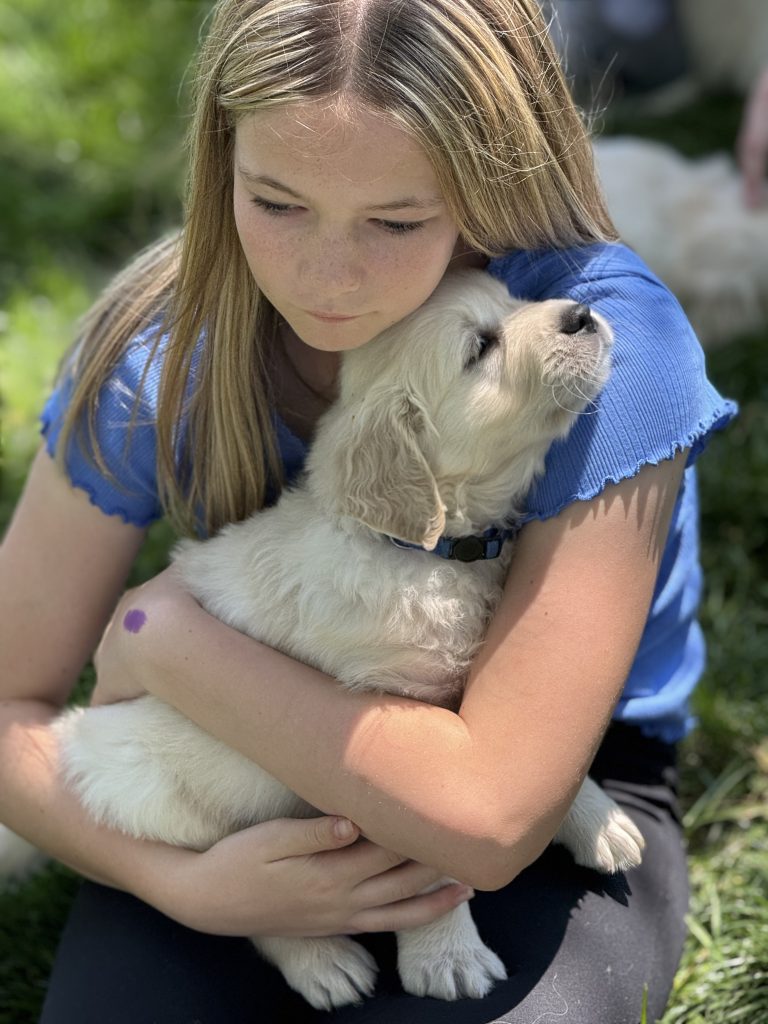
Dogs have evolved alongside humans for tens of thousands of years. Over that time, they’ve become extraordinarily skilled at reading human behavior—our facial expressions, body language, tone of voice, even subtle shifts in scent tied to emotion.
When you’re anxious, your body chemistry changes. Your posture tightens. Your breathing shifts. A dog picks up on all of it.
But it’s not just detection—it’s response.
Dogs are wired to connect socially. They don’t just notice distress; they’re motivated to respond to it. That’s why a dog will rest its head on your knee when you’re crying or sit closer when you’re quiet. It isn’t trained behavior in most cases—it’s relational instinct. I remind people when I’m training a puppy, “Dogs don’t really respond to commands as much as they read a person’s energy.”
They are, in many ways, emotional mirrors that lean toward comfort.

Dogs in Turbulent Times
In periods of societal tension—when the news feels overwhelming, when uncertainty is constant, when division seems louder than connection—dogs offer something rare: consistency. They don’t care about headlines. They don’t engage in conflict. They don’t judge your opinions or your exhaustion.
They remind us of a simpler framework:
-
Are you here?
-
Are you safe right now?
-
Can we take the next step together?
That simplicity can be incredibly stabilizing.
Walking a dog through your neighborhood becomes more than a routine—it’s a quiet act of reclaiming normalcy. Watching them find joy in something as small as a breeze or a scent reminds us that not everything is fractured.
They bring us back to the tangible world when everything else feels abstract and overwhelming.
The Emotional Contract Between Humans and Dogs
What makes the human-dog bond so powerful is that it’s reciprocal.
Dogs rely on us for care, structure, and safety. In return, they offer loyalty, presence, and a kind of emotional honesty that’s hard to find elsewhere.
They don’t pretend. They don’t withdraw affection as punishment. They don’t complicate love.




And in difficult times—whether personal or collective—that kind of relationship can be deeply healing.
Because in the face of uncertainty, what matters isn’t having all the answers. It’s having something—someone—who stays. A steady heartbeat beside your own. A reason to get up, to step outside, to keep moving forward even when the path isn’t clear.
Dogs don’t solve the unknown. They don’t need to. They simply meet us there, in the middle of it, and remind us that uncertainty doesn’t have to mean facing the world alone.
